
National Fire Prevention Week is October 4-10, 2026
Few things matter more than keeping the people you love safe at home. The right fire safety equipment gives you an early warning when something goes wrong and the tools to respond quickly. At Sutherlands, you'll find From smoke and CO alarms to fire extinguishers, escape ladders, and replacement batteries. Sutherlands has the fire safety essentials to help protect your home and family. Visit your local store or shop online today.
Find the Products you need at Sutherlands
Make a Family Fire Escape Plan
Walk through your home and identify two ways out of every room. Choose a safe meeting spot outside, such as a mailbox or a neighbor's driveway. Make sure everyone knows where your extinguishers are kept and how to use them. For bedrooms on upper floors, keep a fire escape ladder within reach. Practice your plan at least twice a year so it becomes second nature.
Equipment is only part of being prepared. Every household should have a plan everyone understands:
Carbon Monoxide Detectors: Protection From an Invisible Threat
Carbon monoxide (CO) has no color, no smell, and no taste, so without a detector there's no way to know it's there. CO can build up from furnaces, water heaters, fireplaces, gas appliances, and attached garages. Install a CO detector outside each sleeping area and on every level of your home, following the manufacturer's placement guidelines near fuel-burning appliances.
Want to cover two hazards with one device? Combination smoke and carbon monoxide alarms protect against both while saving space on your ceiling.
Fire Safety 101
Smoke Alarms: Your Early Warning System
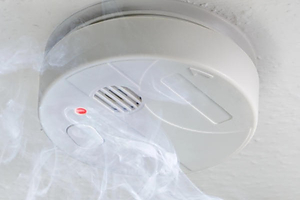
A fire can spread through a home in just a few minutes, and a working smoke alarm is often what gives your family the time it needs to get out. For the best protection, place smoke alarms inside and outside sleeping areas and on every level of your home, including the basement.
Battery-Powered Alarms are easy to install anywhere and typically run on 9-volt or AA batteries. Many models, including options from Kidde, come with a sealed 10-year lithium battery that powers the alarm for its entire life, with no battery swaps and no late-night chirping.
Hardwired Alarms connect directly to your home's electrical system and usually include a battery backup in case the power goes out. Many can be interconnected, so when one alarm sounds, they all sound. Hardwired alarms should be installed by a qualified electrician.
Ionization, Photoelectric, or Both? Smoke alarms detect smoke in one of two ways. Ionization sensors react quickly to fast, flaming fires, while photoelectric sensors are better at catching slow, smoldering fires. A dual-sensor alarm combines both technologies for broader protection.
Test every alarm once a month, replace standard batteries at least once a year, and replace the entire alarm every 10 years.
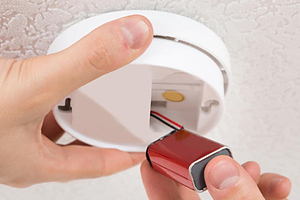
You can replace a smoke detector battery by twisting the unit counterclockwise from its mount, opening the side or front compartment, and swapping the old cell for a new one matching the correct polarity (+/-).
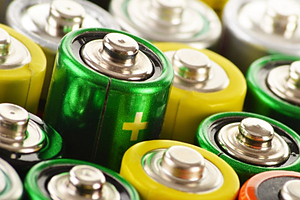
Common Battery Types:
9-Volt (9V): Frequently used as backup or primary power in traditional and hardwired alarms (like First Alert models)
AA / AAA Alkaline: Used in many standard multi-battery optical and ionization detectors.
Specialty / Lithium: Specialized cells like CR123A or sealed 10-year non-replaceable lithium packs built into modern units.
Fire Extinguishers: Stop Small Fires Before They Spread
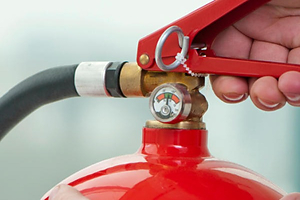
A fire extinguisher can put out a small fire or clear a path to safety. Extinguishers are rated by the types of fire they're made to fight, so it's important to choose the right one for each area of your home.
Class A is for ordinary combustibles like wood, paper, cloth, trash, and plastic.
Class B is for flammable liquids such as gasoline, oil, paint, and solvents.
Class C is for electrical fires involving wiring, outlets, motors, and appliances. If it's safe to do so, cut power to the device first.
Multi-Purpose (ABC) Extinguishers handle all three fire types, which makes them a smart all-around choice for most homes. These dry chemical extinguishers work by coating the fire with a fine powder that cuts off its oxygen. You'll also find extinguishers made for specific spaces, such as kitchen models designed for cooking fires, plus rechargeable options that can be serviced and reused.
Always keep a clear exit behind you. If the fire grows or doesn't go out quickly, leave immediately and call 911.
Where to Keep Them: Place at least one extinguisher on every level of your home, with extras in high-risk areas like the kitchen, garage, and workshop. Store them near exits where they're easy to grab, and check the pressure gauge regularly to make sure they're ready to use.